

The world is built on structures.
The government, work hierarchy, at home, and even at the restaurant (yes, they use structure too).
Why?
Because structures keep everything in place. Without a structure or system, you’d have people who don’t know what to do, when to do, or how to do it.
A big hot mess!
You can’t downplay the importance of structures and systems.
They keep you in check. They keep you going when, honestly, all you want is to give up and walk away.

What is the difference between a system and a structure
You may notice two terms I’ve used interchangeably: structures and systems.
They are similar but not the same.
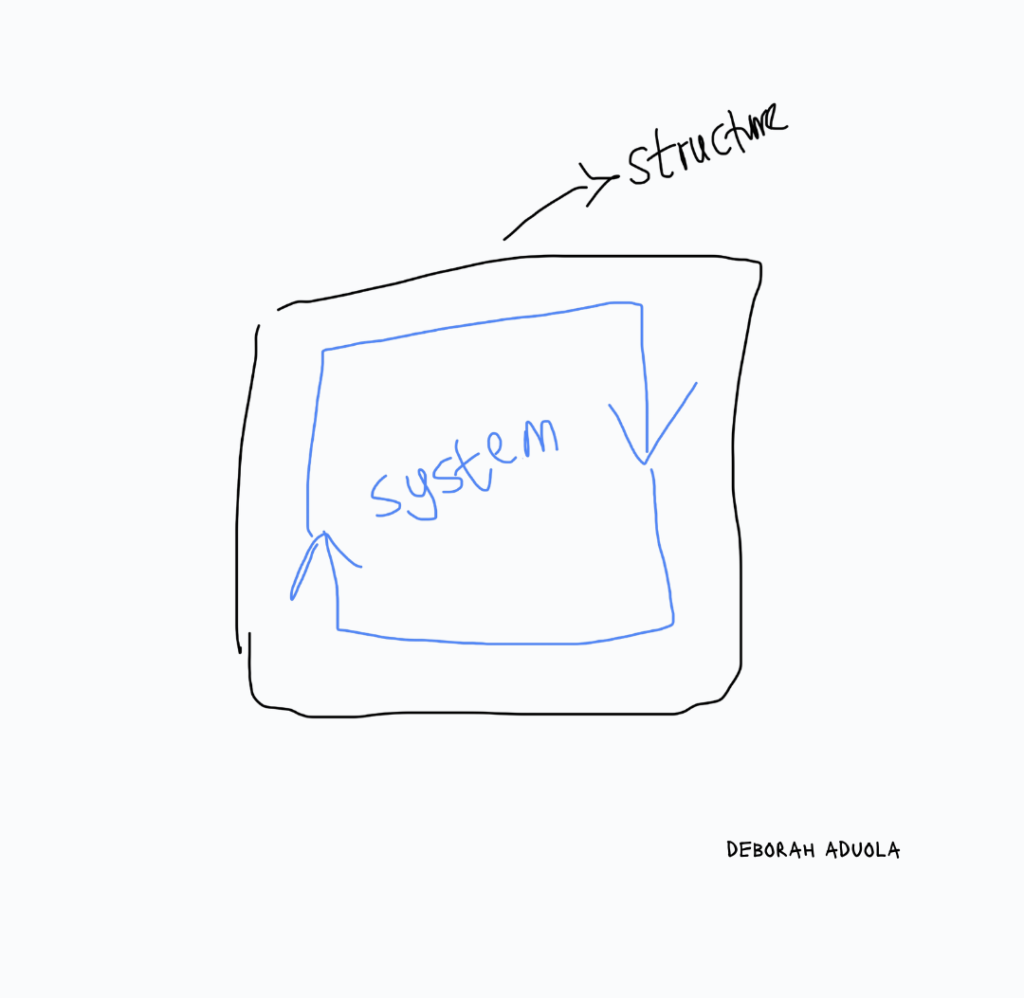
Think of a structure as the wall that holds a system. It is the blueprint that guides how you perform tasks or live daily.
A system, on the other hand, is the repeatable process you follow once you are inside a structure.
For example:
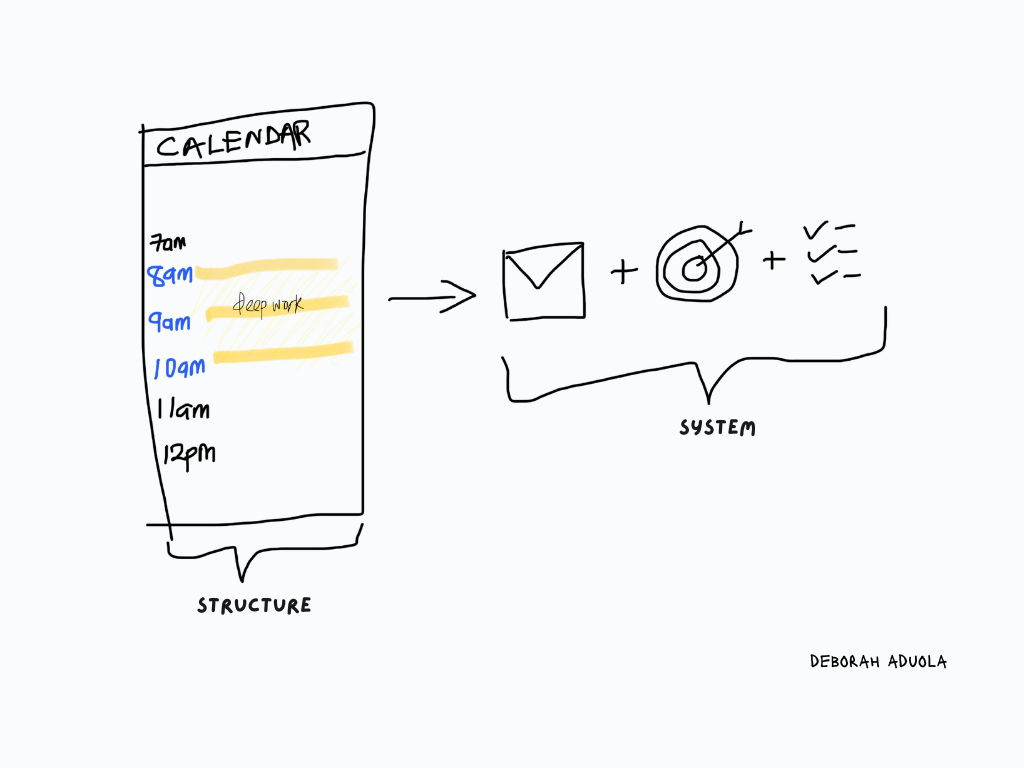
A morning time block from 8 am to 10 am for “Deep Work” is a structure.
A proven routine that lets you work with focus during those hours is a system, e.g., check three emails → work on campaign strategy→ jot tasks for the day.
Here are some more examples:
- A structure is a wake-up time (6:30 AM). A system is a morning routine, e.g., wake up → drink water → 20 min walk → shower → coffee + review top 3 tasks for the day.
- Your bank account split into categories like bills, savings, and spending is a structure. Transferring set amounts on the 1st of every month to each category is a system.
- A weekly meal plan with a fixed shopping day is a structure. Every Friday night, you check the fridge, write your grocery list, shop on Saturday, and meal prep when you get home. That’s a system.
A structure is the container. A system is what happens in the container.
A structure ensures continuity. It must be simple and personalized to your situation. A system is repeatable, that is, you can apply it often with little friction, and proven; it helps you achieve a goal.
One cannot exist without the other.
If you have only structure (e.g., a time block), you might waste it scrolling because you don’t have a plan for how to work.
If you have a system alone (e.g., a morning routine), you’d implement it by 12 pm because you woke up late.
You need the structure to protect the system.
How to create structures & systems to organize your life
Unlike what you’d like to believe, building a structure is not difficult.
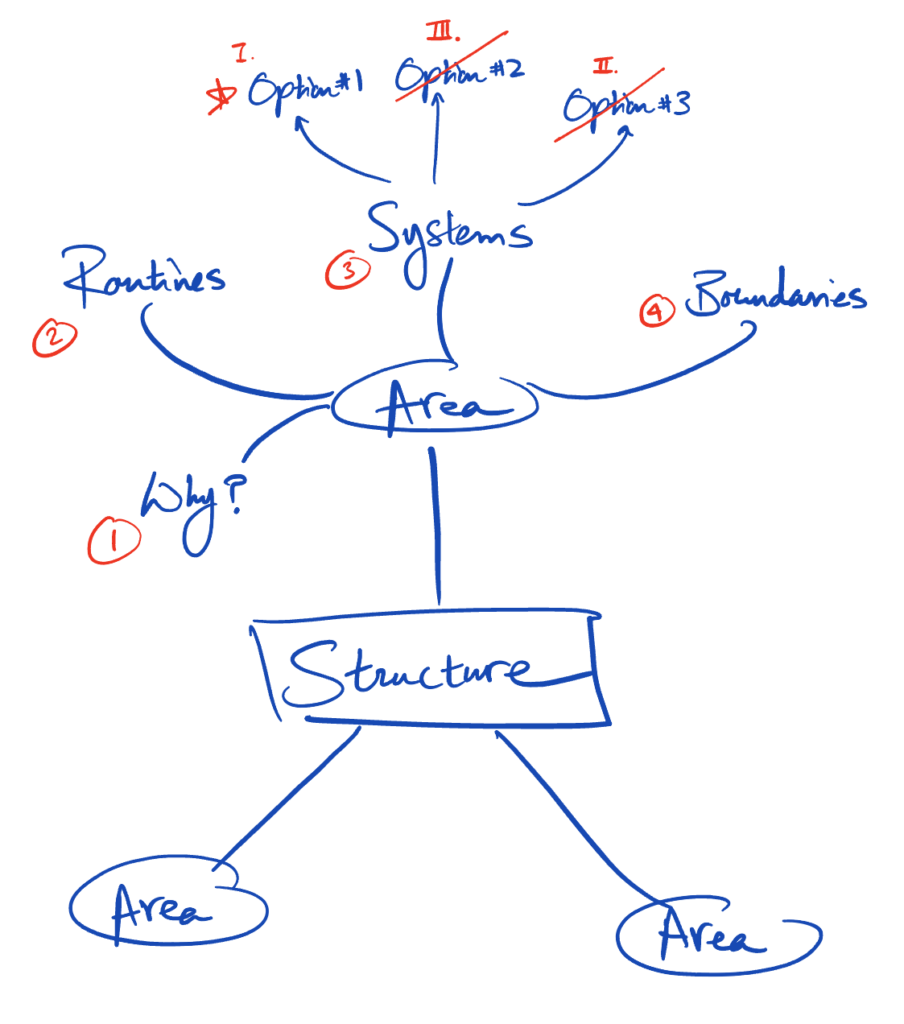
All you need is to identify an area in your life that needs improvement or a habit you’d like to change. Then organize with a system.
What do I mean?
Say you spend too much time on your phone.
Set a boundary to drop your phone by 6 pm (structure), and spend the evening reading instead (system).
Or,
Your finances need help. You spend lavishly and have little savings. Set a simple percentage-based income budget (structure), and read two articles on curbing excess spending during the month (system). Don’t forget to track your expenses too (system).
It all starts with:
- Identification– figure out what aspects of your life need growth.
- Establishment– set up boundaries or barebones that form a basic structure.
- Implementation– define systems to make growth consistent.
- Measurement– track what works vs. what isn’t, and make changes.
Now over to you.
What life area do you need structures and systems in? It could be:
- Learning habits: information you consume, reading habits.
- Work & productivity: the flow of your day, how you spend your time.
- Relationships: your friendships, social life, or healthy boundaries.
- Home & health: Is your space clean and organized? Eating habits, personal hygiene
- Mental & Emotional Wellbeing: Stress level, self-awareness, or quality of life.
Growth cannot be sustained without systems, because intentional growth requires discipline and consistency, two feats that cannot be achieved without a predictable rhythm.
When you create systems and structures for your life, you set a practice that ensures visible progress in the areas you seek to change.
–
Cover image from Kaboompics