
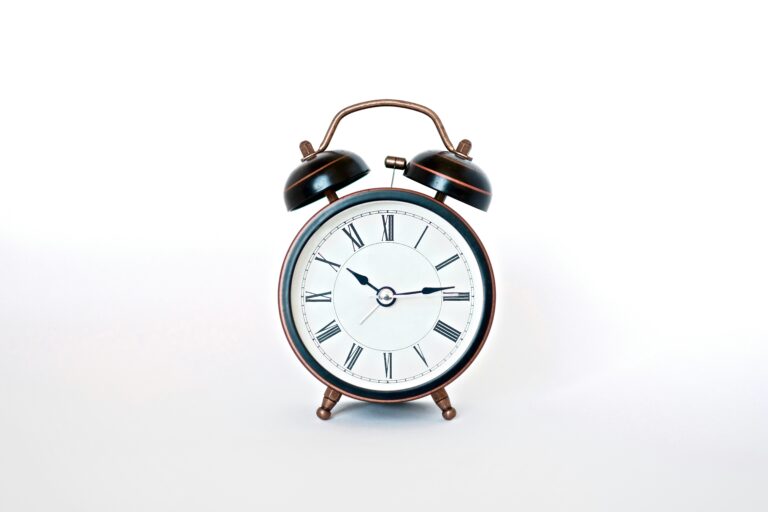
Work is a privilege.
It is an opportunity to make progress on endeavours that matter and it bring us closer to a goal.
Many people, however, do not view work as an advantage. To them, work drains, takes too long, and leaves little room for other interests.
There’s good news. Tracking your time solves this dilemma.
How? It shows you what you’re managing, how much time you’ve spent on it, so you can tweak, improve, and make time for priorities that matter to you.
This is especially useful if you feel busy and overwhelmed with little to show for it.
Time tracking shows you where your hours go.
Why should you track time?
The short answer is you can’t improve what you don’t measure. And you can’t measure what you don’t track.
Time tracking gives you a realistic picture of how you use your 24 hours. Do you sleep too much?
Do you waste time on activities that don’t move you towards your goal?
You can’t answer those questions without data.
Not random guesses, but a pragmatic picture that shows you what you do, versus what you think you do. Our minds play games with us, don’t they?
✍🏼 Here are some other benefits of clocking your time:
Reveals the fluff in your work
You see what takes more time than necessary, what can be delegated, and what can be cut off.
Set informed time limits
Have you tried scheduling your day only to find tasks spill over each other because they took more or less time than you expected?

Well, that happens because you overestimate or underestimate the time taken to complete a task.
Time-tracking removes that overlap.
It shows you the average time taken to complete a task, so next time you need a schedule, you set the right duration.
Improves productivity
When you see how you spend time, you will be motivated to improve.
Imagine your time stamp for a week looks like this:
12 am-9 am- sleep
9 am-11 am- clean up, scroll on social media
2 pm-4 pm- call with Grace
4 pm-7 pm- outing
7 pm-9 pm- resting, dinner
9 pm-11 pm- work
What comes to your mind? Cringe.
At a glance, the time sheet reveals late bedtime, which encourages sleeping in, an inconsistent work routine, and random activities that eat up time.
Denying these tendencies becomes hard when they are spelled out on paper. And making changes that improve your work becomes easier. You may need to sleep earlier, reduce chatting, or do more meal prep on Sunday.
Note: Our schedules usually look similar to this, but we don’t know because we don’t track how we spend time.
When we do, we see patterns that need to be modified or defined.
How to track time
Tracking time is not as simple as putting on a stopwatch and watching the seconds roll by.
Some steps must be put in place to get the most profit.
Define why
There are myriad reasons to track time.
It could be to:
- Check how you spend time generally
- Identify which work-related activity takes the longest duration,
- Or, monitor how long it takes to read a book.
Different reasons require different approaches.
Decide on the period of tracking
While logging hours has its benefits, you can’t track every second forever.
You are human, not a machine. Machines benefit from monitoring and never-ending optimization. Humans don’t.
Ceaseless monitoring weighs us down and wastes time—the opposite effect of what we aim for.
Hence, define how long to track your time.
It is easier to have an idea of how long if you have a defined why. For example, a week of monitoring is enough to keep tabs on your habits.
You can log hours for more than a week, too, but don’t track time for an interminable period.
The purpose of time-tracking is to get data that informs and influences the actions that follow.
Best practice is to track time for a week, implement changes based on the patterns you’ve observed, and track again to evaluate the progress you make.
Choose a method of tracking
There are several ways to keep tabs on time. Here are some good ones:
- Paper and pen. Grab a sheet of paper, note the time, and record the span of each activity. You can get a time-tracking sheet here.
- Mobile softwares. Apps like Toggl, Clockify, or Harvest track time. All you have to do is log the task and start tracking.
- Pomodoro. Pomodoro is a popular technique that uses a timer to break work into focused 25-minute intervals separated by short breaks. Repeat a pomodoro four times and you get a cycle. Track time using the Pomodoro method by noting how many Pomodoros it takes to complete a task.
Monitor time spent on each task
This step is obvious.
But how many times do we forget to keep track of time?
Be conscious of the hours and log them.
Your work here is to track time, not fix things. Be mindful of potential improvements, but don’t shift focus from tracking to tweaking.
Wait till the tracking period is over before you implement any major changes.
Review and get data
Once you’ve tracked time for the given period, review the results and note patterns and habits.
- What do you spend time on?
- What do you do first thing in the morning?
- Is there any practice you need to change?
- Are there new habits you’d like to build?
Take note of what’s working, what needs fixing, and what the data says about your work.
For example, from time tracking, I noticed it takes four pomodoros to research and write the first draft of an article. It takes another four to complete a fully optimized article. That’s eight pomodoros. That sums to 8*30= 270 minutes or 4.5 hours. So if my work rate is $300/hr, I’d charge $1,350 for an optimized article.
That’s an example of how to use information from time tracking.
Make changes
See bad patterns? fix it. Improve your sleeping habits. Be conscious of tendencies that waste time.
Prone to tiredness around 2 pm? Do your most important tasks in the morning.
The more you implement, the better you’ll be.
You can re-track the changes you’ve implemented to see how much progress you’re making.
However, note that change takes time and determination.
You won’t suddenly start waking up at 6 am, when your usual wake-up time is 8 am simply because you say it. You might in the first few days, but habit will replace wishes.
Implement smaller fixes instead. Set an alarm for 7:30 am, instead of a sudden leap to 6 am. Track that for a given period. If you’re still not good, figure out why, make changes. Improve. That’s how you get better.
Be patient with yourself, but make progress. Time tracking provides the incentive and data to keep you going.
–
Cover Image by insung yoon on Unsplash